
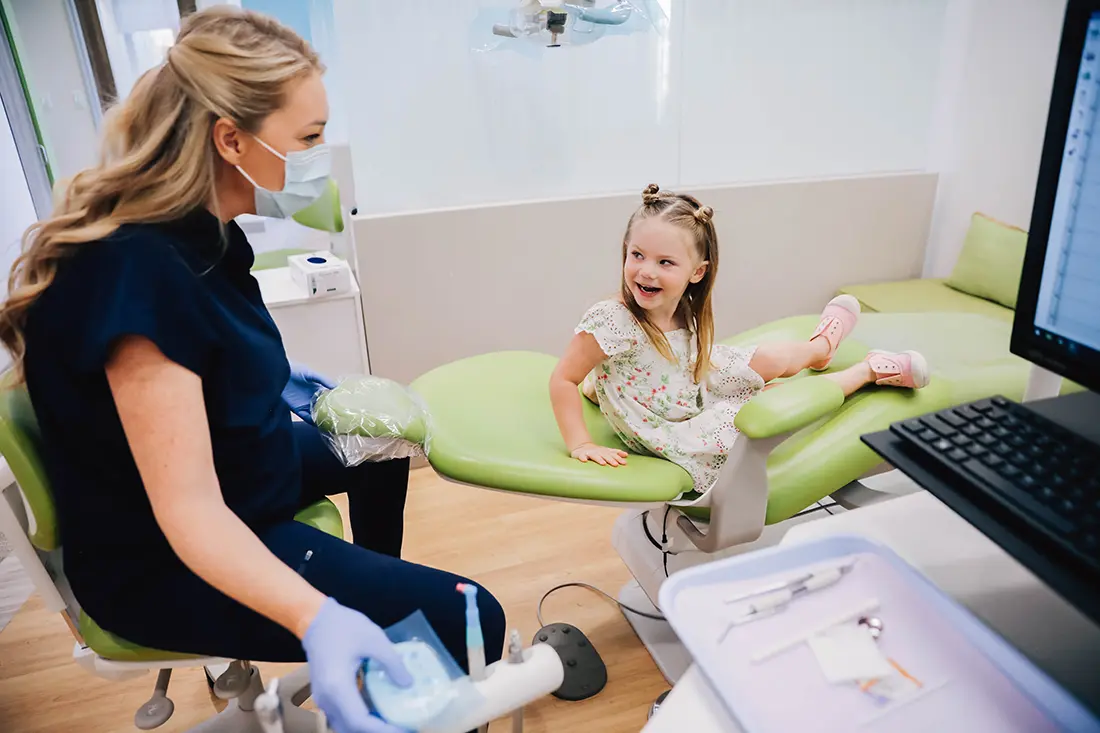

Yes. Dental sedation is safe for children when a trained pediatric team screens your child's health first, chooses the lightest option that works, and monitors breathing and vital signs the whole time. Laughing gas, the most common choice, wears off within minutes.
Hearing the word sedation next to your child's name can stop any parent in their tracks. It is a fair reaction, and it deserves a straight answer rather than reassurance alone. This guide explains what pediatric dental sedation actually is, the different levels and how they compare, who tends to benefit, what keeps it safe, and what you can do to make the day go smoothly. It is general information, not a substitute for the conversation you will have with your child's dentist about their own health history.
Sedation is the use of medication to help a child feel calm, comfortable and still during dental care. It is not the same thing as numbing. Local anesthetic numbs the tooth and gum so treatment does not hurt. Sedation works on how your child feels about the visit: the worry, the wiggles and the urge to sit up and look around. Many children need numbing and no sedation at all. Some need a little help with both.
Sedation exists on a spectrum. At the lightest end, a child is relaxed but fully awake, talking and responding normally. At the deepest end, general anesthesia, a child is completely asleep. Most pediatric dental visits that use sedation sit at the light end of that range.
The right level depends on your child's age, health, temperament and how much treatment is needed. Here is how the common options compare in plain terms.
Nitrous oxide is a mild gas mixed with oxygen and breathed through a small mask that rests over the nose. Kids stay awake and can answer questions, but they feel relaxed, a little floaty and less bothered by sounds and sensations. It starts working within a few minutes. When treatment is done, your child breathes pure oxygen for several minutes and the effect clears quickly, which is why most children can go back to their normal day afterward. It is the most common sedation method in pediatric dentistry and has been used in dental offices for well over a century.
Oral sedation is a prescribed medication taken by mouth, usually as a liquid, before treatment begins. Children stay conscious and can respond, but they are noticeably drowsy and may not remember much of the appointment. It takes longer to kick in and much longer to wear off than laughing gas, so children need a quiet, supervised day at home afterward. It is sometimes considered for children with more anxiety or longer treatment needs when laughing gas alone is not enough.
General anesthesia means your child is fully asleep and unaware during treatment, with breathing supported and monitored by an anesthesia provider. It is generally reserved for very young children who need extensive work, children with complex medical or special healthcare needs, and situations where lighter options would not be safe or effective. It is often done in a hospital or surgical setting. It is a bigger decision, and a good pediatric team will walk you through exactly why it is being recommended and what the alternatives are.
For healthy children who are properly screened, dental sedation has a strong safety record. The safety does not come from the medication alone. It comes from the process wrapped around it.
At our office, that process starts at the consultation. We review your child's complete medical history and talk through the options on our pediatric sedation page before we recommend anything, and we monitor vital signs during every sedated appointment.
With laughing gas, side effects are uncommon and brief. A few children feel slightly queasy, which is one reason a light meal beforehand is usually recommended. With oral sedation, expect drowsiness, unsteadiness and possibly a nap for several hours afterward. Some kids are cranky as the medication wears off. Your dentist will tell you which signs are normal and which are a reason to call.
Sedation is not a shortcut, and it is not for every child. It helps most when it lets a child get care they need in a way that is calm and safe. Children who often benefit include:
Just as often, the answer is that a child does not need sedation. A patient, kid-focused team, tell-show-do explanations, a favorite show on the ceiling and a parent's calm voice go a long way. For some early cavities, a non-drilling option such as silver diamine fluoride can slow decay without a long appointment at all.
Preparation matters as much as the medication. Small details on the day make a real difference to how smoothly things go.
After laughing gas, most kids are back to themselves quickly. After oral sedation, plan a quiet day at home with an adult watching closely. Start with clear liquids and soft foods, keep your child away from stairs, bikes and playground equipment until they are steady on their feet, and watch that they do not chew their numb lip or cheek.
A good sedation plan should never feel rushed or unclear. Bring these questions to the consultation, and do not be shy about writing the answers down.
Clear, specific answers are a good sign. If anything sounds vague, ask again. You know your child better than anyone, and details such as snoring, a recent illness or how they reacted to medication in the past are exactly the information that helps the team plan safely.
Usually not. Laughing gas and oral conscious sedation keep your child awake and responsive. Only general anesthesia puts a child fully to sleep. If someone recommends sedation and you are not sure which kind they mean, ask directly. You should always know the level being proposed, why it is needed and what would happen if you chose a lighter option instead.
It is also completely reasonable to ask for a second opinion when extensive treatment under deep sedation is recommended. A good pediatric dentist welcomes those questions. The goal is the same for everyone in the room: healthy teeth and a child who is not afraid to come back.
Sedation handles one appointment. The bigger win is a child who grows up comfortable at the dentist. Regular checkups and cleanings catch problems while they are small, which is the single best way to avoid long treatment visits in the first place. Short, routine, positive visits build trust over time, and many children who needed sedation once never need it again.
There is no single cutoff. It depends more on whether your child can breathe comfortably through their nose with the small mask in place than on age alone. Your pediatric dentist will judge that at the visit.
Policies vary with the type of sedation and the procedure. Ask ahead of time so you and your child know exactly what to expect when you arrive.
With laughing gas, most children remember the visit but recall it as relaxed. With oral sedation, many remember little or nothing, which can be helpful for anxious kids.
At the low levels used in pediatric dentistry, and with oxygen given at the end, laughing gas is considered very safe for healthy children. It leaves the body quickly through normal breathing.
Call the office before you come in. Congestion can make it hard to breathe through the nose mask, and some illnesses make sedation less safe, so the appointment may need to move. You can reach our team through the contact page or by phone at (760) 599-5437.

