
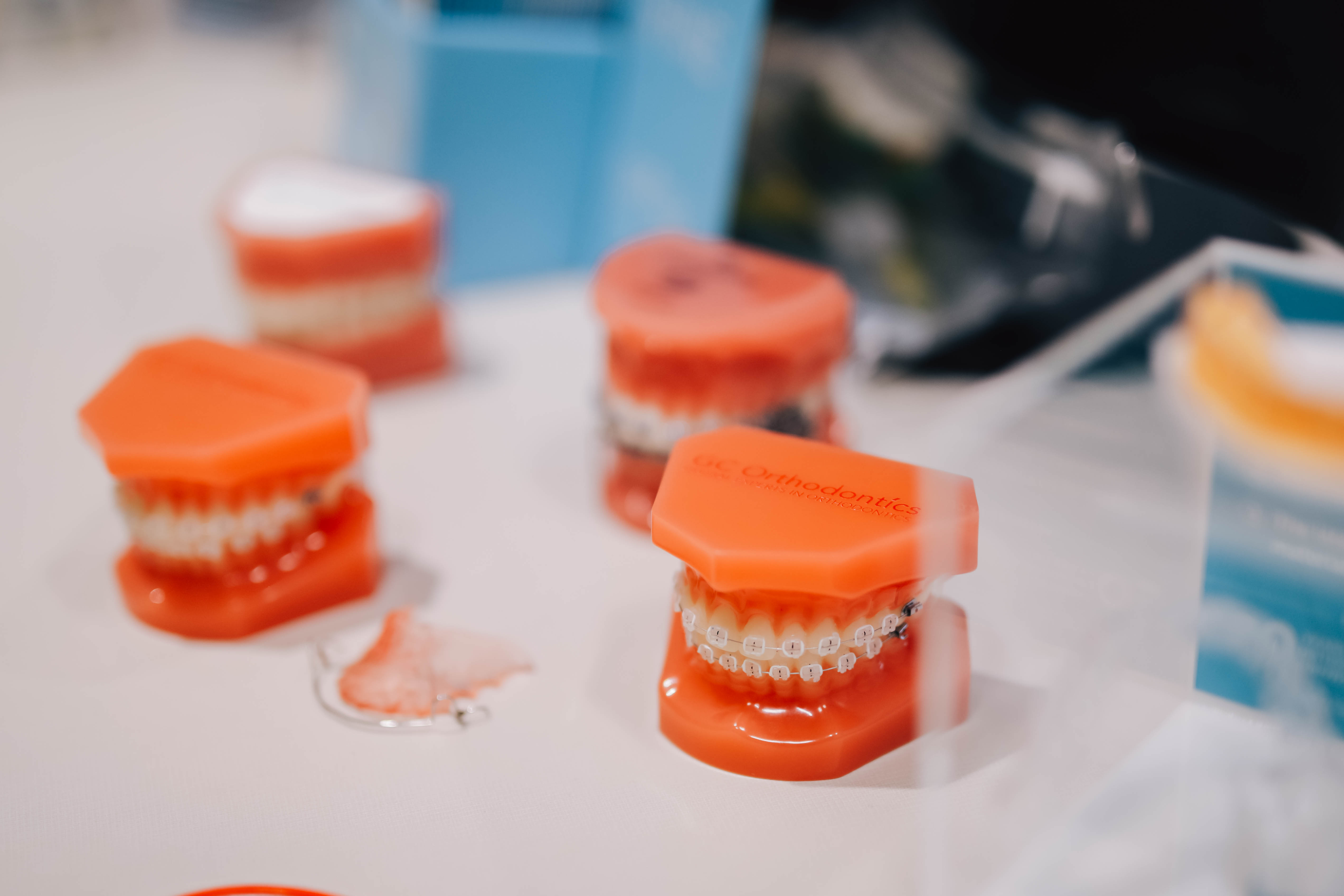

Self-ligating braces hold the wire with a small clip built into each bracket instead of elastic ties. That means fewer places for plaque to collect and often quicker adjustment visits. Both types straighten teeth well, and overall treatment time is usually similar.
When families start orthodontic treatment, the choice of bracket is one of the first decisions they hear about, and marketing claims can make it confusing. Some ads promise dramatically faster treatment or almost no discomfort. The reality is more modest and still genuinely useful. This guide compares self-ligating and traditional braces side by side, explains what the research actually shows, and covers how our orthodontist decides which option fits a particular patient.
Every set of braces has the same three core parts: brackets bonded to the teeth, an archwire that runs through them, and something that holds the wire in each bracket. In traditional braces, that last job is done by tiny elastic rings called ligatures, or by thin steel ties. The wire applies steady pressure, and over time the teeth move into their new positions.
Traditional braces have been refined for decades. They are predictable, versatile and effective for everything from mild crowding to complex bite problems. Many kids also love one feature of the elastic ties: they come in colors, so each adjustment visit is a chance to pick new ones.
Self-ligating brackets replace the elastic ties with a small sliding door or clip built into the bracket itself. The door closes over the wire and holds it in place. There are no ligatures to change, stretch or discolor between visits. Our self-ligating braces come in both metal and tooth-colored versions.
Self-ligating brackets come in two broad styles. Passive brackets hold the wire loosely inside the clip, which lowers friction and suits the early stages of treatment. Active brackets use a spring clip that presses against the wire for more control later on. Your orthodontist chooses the system; for you and your child, the day-to-day experience is similar.
Here is a quick side-by-side of the differences families ask about most
The advantages are real, even if they are more practical than dramatic
A balanced comparison has to include the tradeoffs
This is the most common question, and it deserves an honest answer. Research comparing the two systems generally finds that total treatment time is similar. The biggest factors in how long treatment takes are how complex the bite is, how well the patient follows instructions, such as wearing rubber bands when asked, and how consistently appointments are kept.
What self-ligating braces can shorten is time in the chair at each visit, and in some cases the number of visits. For families balancing school, sports and work, that convenience is often the most meaningful benefit. Be cautious with any promise that one bracket type will cut months off treatment by itself.
Adjustment visits are the routine checkups that keep treatment moving. With traditional braces, the orthodontist removes the ties, checks progress, changes or adjusts the wire if needed, and places new ties. With self-ligating braces, the clips are opened, the wire is checked or changed, and the clips are closed again. Either way, the orthodontist also looks at how the bite is changing, checks brushing around the brackets and decides whether rubber bands or other small additions are needed for the next stage.
Visits are typically spaced several weeks apart. Keeping them on schedule matters more to your overall timeline than the bracket type does, because each visit is when the next step of tooth movement is set up.
Many patients report feeling less pressure between visits with self-ligating braces, and the lower-friction design is one reason why. Comfort is personal, though, and research on the difference is mixed. With either type, expect a few days of soreness after the braces go on and after adjustments. Soft foods, a children's pain reliever when needed and orthodontic wax on any spot that rubs take care of most of it.
Most people who are good candidates for braces are good candidates for self-ligating brackets. They treat the same range of crowding, spacing and bite problems as conventional braces. They can suit:
Some patients still do better with traditional brackets, or with a different option such as ceramic braces, depending on the bite and their priorities. The right answer comes from an exam, not from a brochure. Our board-certified orthodontist, Dr. Anke Beyer-Jordan, looks at each patient's bite, records and goals before recommending a bracket system.
A consultation is the time to get specific. These questions help families compare options clearly.
The answers will tell you far more than any bracket brand name. A clear plan, a realistic timeline and a team that explains the why behind each step are what make treatment go well.
Daily care is the same as with any braces. Brush after meals, clean around each bracket and under the wire with a floss threader or water flosser, and keep up with regular dental cleanings. Avoid hard, sticky and chewy foods like popcorn, hard candy, caramel and ice, which can damage brackets or open a clip. Wear a mouthguard for contact sports.
The first few days are the biggest adjustment. Teeth feel tender, and the inside of the lips and cheeks needs time to toughen up against the brackets. Plan meals around soft foods such as pasta, yogurt, soup, eggs and smoothies, and use orthodontic wax on any bracket that rubs. Most children adapt within a week and stop noticing their braces much at all.
If a bracket comes loose, a clip opens or a wire starts poking, call the office. Most of these issues are minor, and our orthodontic emergencies guide explains what you can safely do at home until you are seen.
Damon is one brand of self-ligating bracket. Self-ligating is the broader category, and several manufacturers make them.
It is possible but rarely necessary. The bracket choice is usually made at the start and kept through treatment.
Yes. Every braces patient needs retainers afterward, because teeth naturally try to drift back without them.
Are self-ligating braces a good choice for younger kids?
They can be. Easier cleaning and shorter appointments help younger patients, though some kids prefer traditional brackets for the colored ties. The orthodontist will recommend what fits the bite first.
Start with an orthodontic exam. Our first orthodontic visit page explains what happens at that appointment, or call (760) 599-5437 to schedule.

